Bystander MR
Mixed Reality Installation/2022
The remake of the previous work Bystander in Virtual Reality, along with an interactive AR installation and a collage film to elicit the audience’s reflection on domestic abuse and their upsprings.
Adverse childhood experiences (ACEs) are an underestimated public health threat. It impairs children’s brain development, immune system, and hormonal systems. These impairments predispose children to various chronic mental and physical diseases. However, its negative impacts are not widely known by the general public. Liu Change created a mixed reality (MR) installation based on her personal experience with ACEs and ACEs related Post-traumatic stress disorder (PTSD), which aims to provoke the audience’s reflection on ACEs and the influence of their upbringings on their mental and physical development. We conducted semi-structured interviews with 12 audiences, and their response to this MR installation was analyzed using the thematic analysis method. The analysis proved that this MR installation is capable of eliciting the audience’s reflection on ACEs and their upbringing. In addition, The VR experience enabled participants to emotionally and somatically experience several symptoms of PTSD, and 75% of the participants demonstrated a high level of emotional self-awareness during the VR experience. Lastly, the analysis revealed that participants who had never encountered ACEs are more likely. If you are interested in knowing the details of this user study, you can download the full paper on the research page of my website. I will focus on introducing the VR, AR, and Collage films on this project page.

The AR installation consists of three parts: a sculpture, a holographic screen projected with animation, and audience participation. When the viewer approaches the holographic screen, his/her body movement will be captured by a depth camera, and the captured image will be projected onto the holographic screen in real-time, which blends with the abstract animation. This arrangement aims to make the audience feel that he/she is no longer the spectator but the protagonist of this animation.

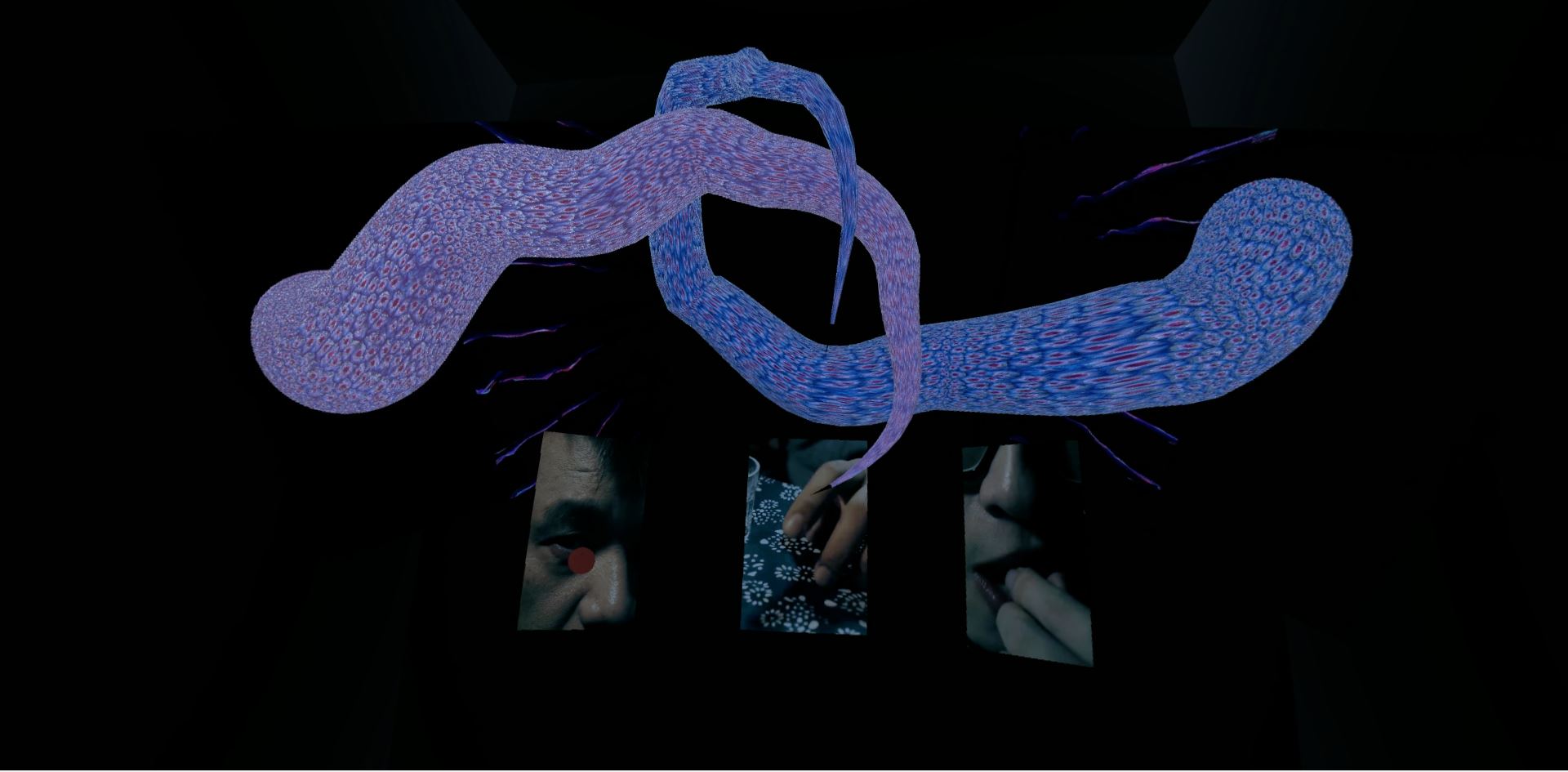
The animation is inspired by Nicole M. O’Neil’s poem “A family is like a circle” . The audio of Chang Liu reading this poem accompanies the holographic animation, describ- ing the positive aspect of kinship: the bond between fam- ily members is unbreakable; family is always there to watch over and support us; parents educate and enlighten us through their words and behaviors. In contrast, the animation depicts the negative aspect of kinship: the indestructible blood ties could also be lifelong torture from which one cannot escape; the excessive attention from family members may evolve into ceaseless blaming and abuse; Parents will stifle children’s autonomy by imposing values on them. The juxtaposition of the poem and the animation emphasizes the duality of con- sanguinity: nourish/shield vs. erode/fetter. The sculpture is a metaphorical representation of children growing up in an abusive family, who are like the seedlings rooted in noxious soil. The vines twined around the sculpture symbolize blood ties that fetter and erode the children; the mutated lower part of the sculpture indicates the emotional numbness and impaired physical health of abused children. The juxtaposition of the sculpture, the animation, and the audience’s reflection on the holographic screen will prompts the audience to associate the holographic anima- tion with the sculpture and to associate the entire installation with his/her personal experiences; thus, the audience will be guided to reflect on kinship by recalling his/her upbringing.

Still images of the VR film
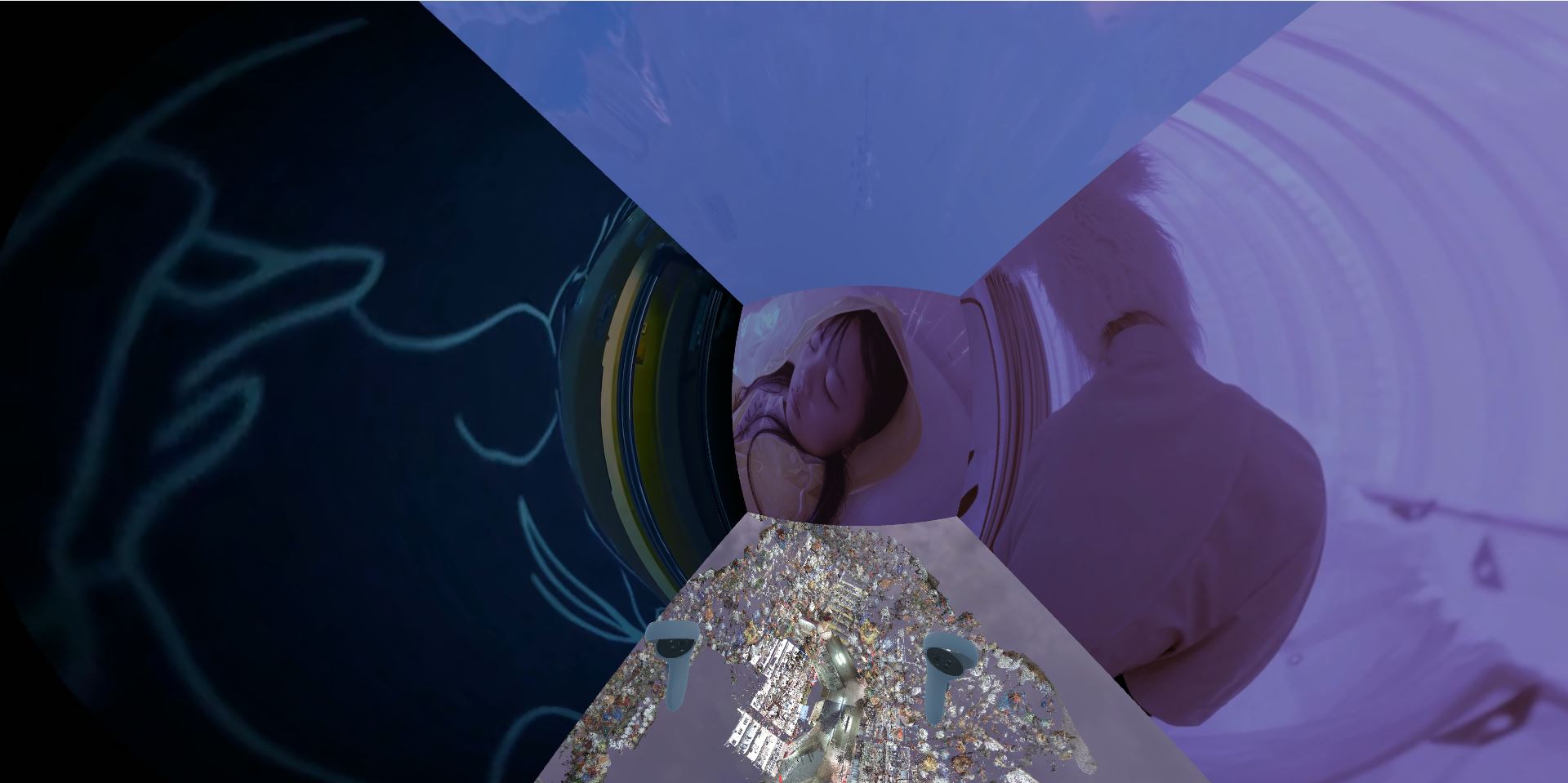
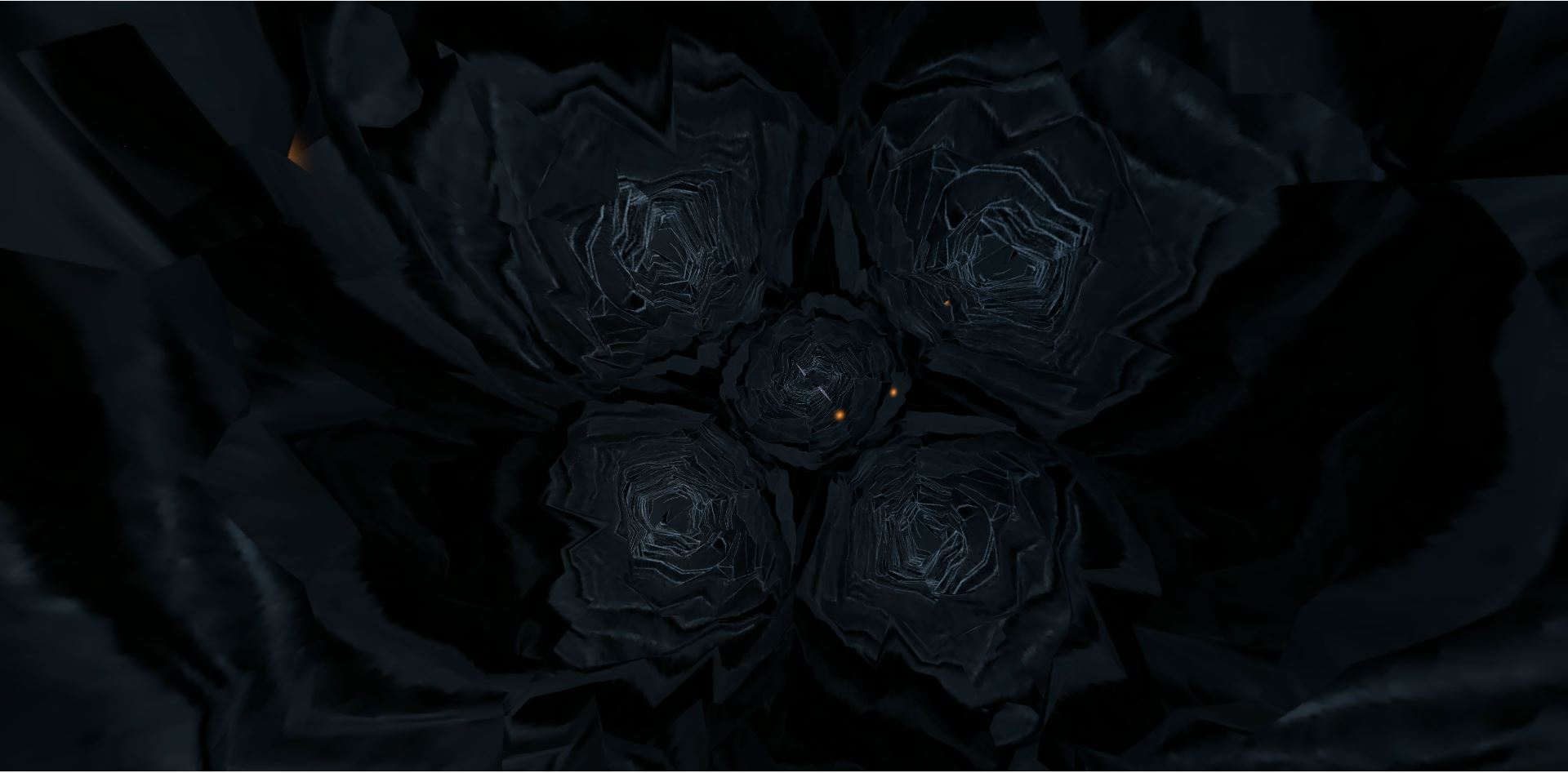
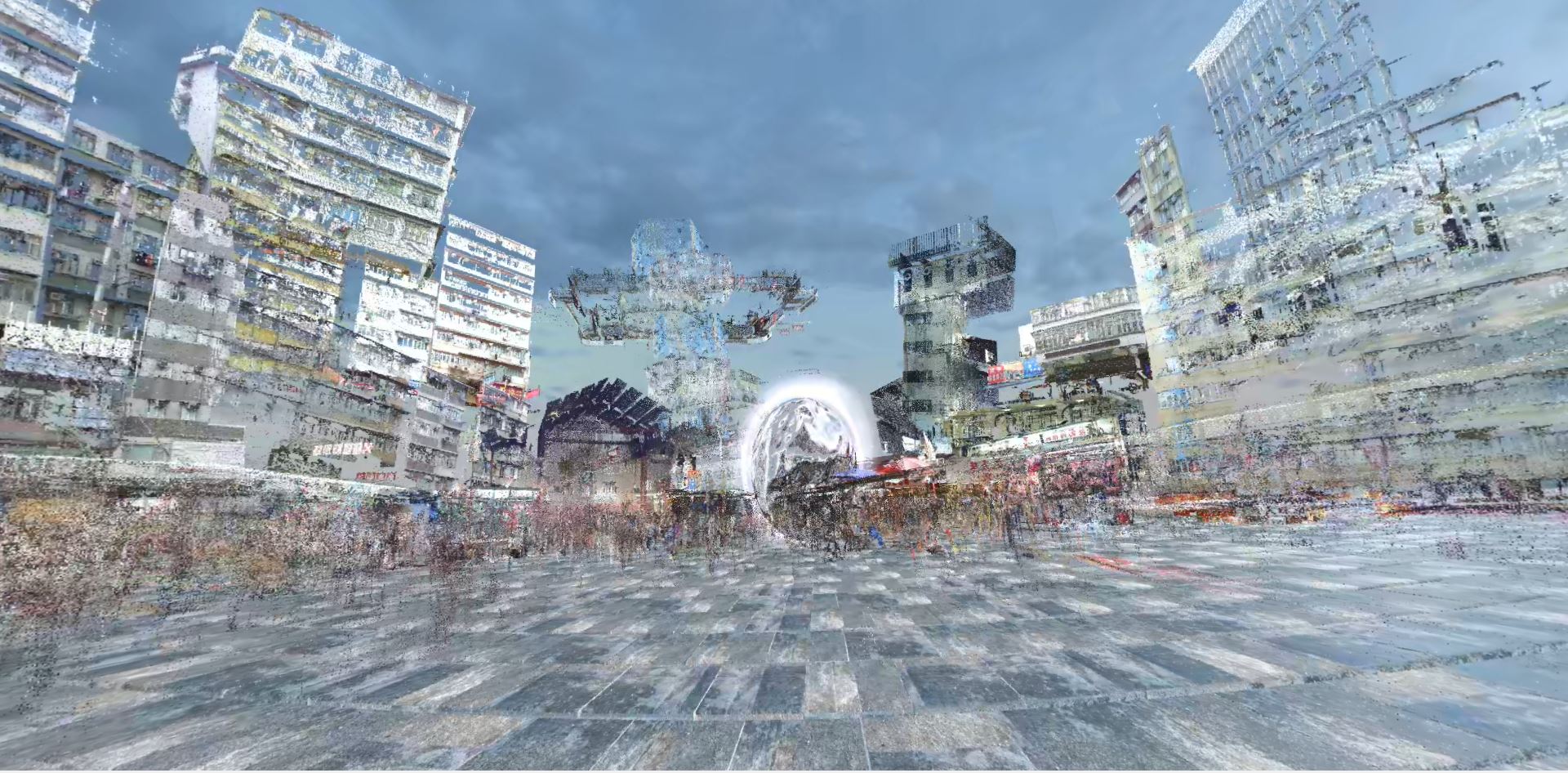

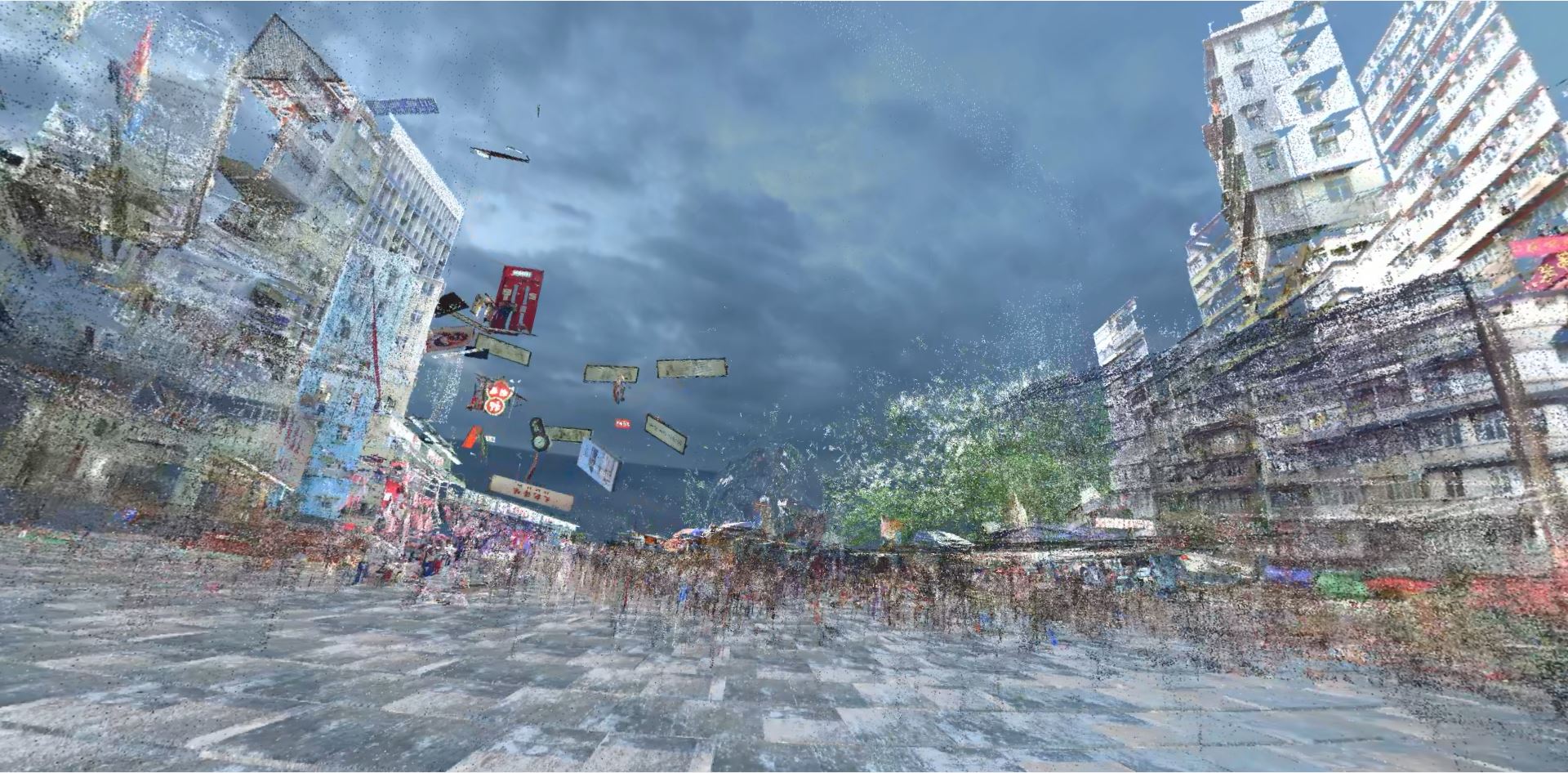
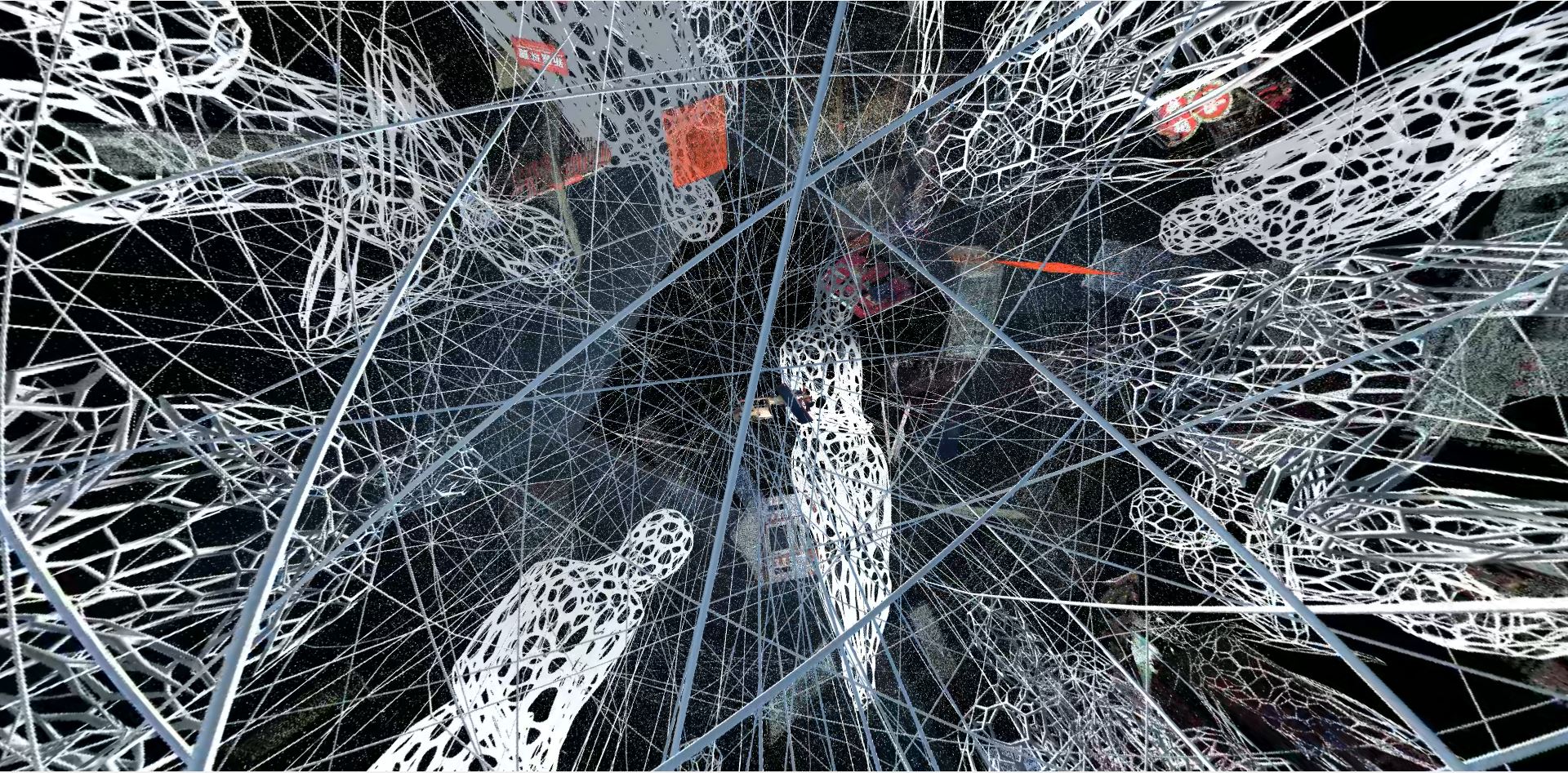
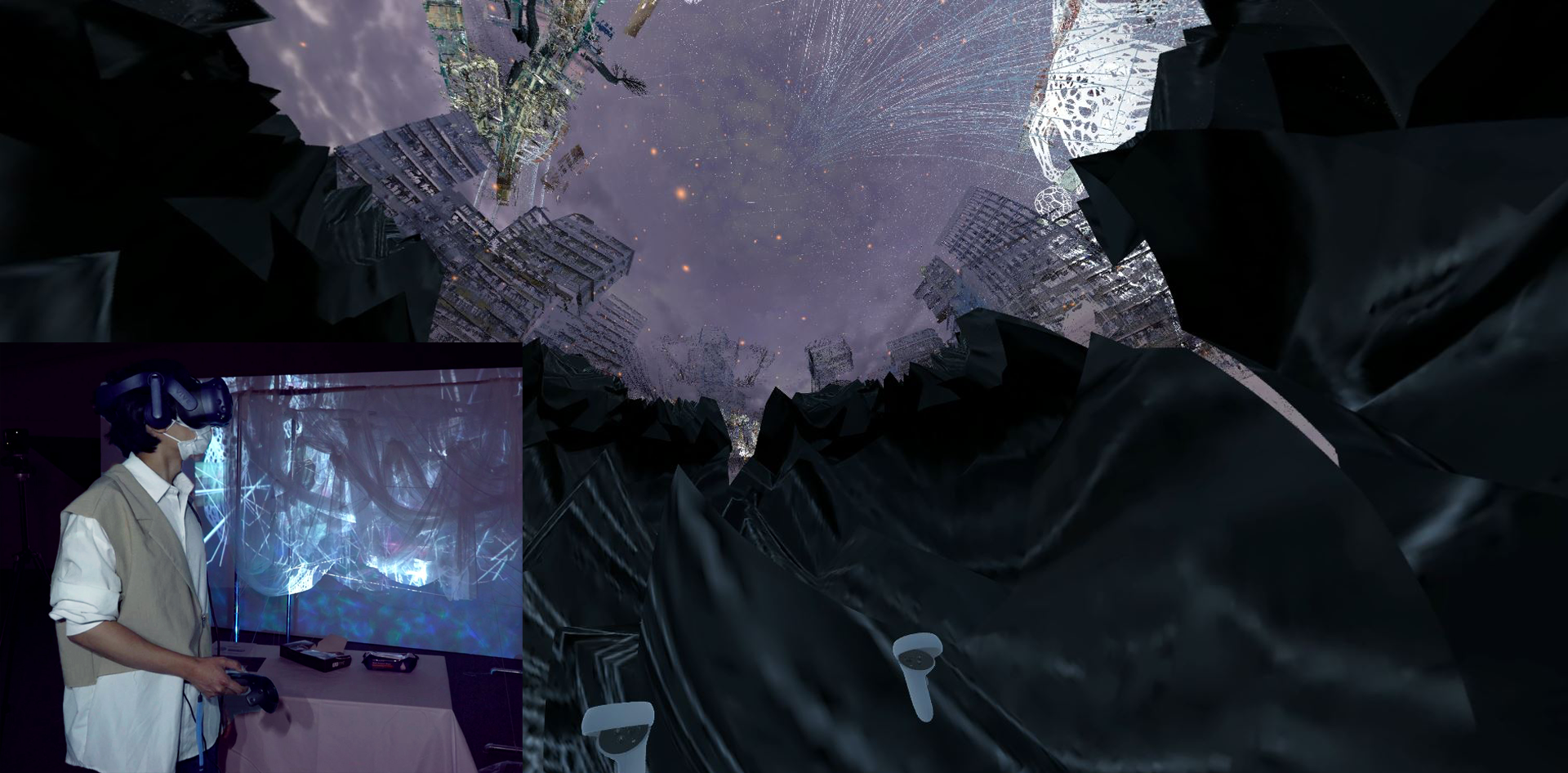
I was diagonozed with childhood PTSD. Every time when I encounter stimuli in daily life that remind me of my truams, there will be vivid replay of these traumatic experiences in my mind and I will suffer from a surge of negative emotions related to my traumas. At the meantime,I will slip into a hypervigilant mental state, my sensory perception will be heightened, and I will suffer from great anxiety and alertness. In that state, I am very sensitive to others‘ hostility towards me, and the whole world looks and sounds more chaotic and threatening to me. Therefore I thought of using the photogrammetry of HK’s landscape to show the change in my mental state. And make use of the first-person perspective in VR to give the audience the feeling that they are looking at the environment from my perspective. The audience will be first placed in a world that represents my habitual mental state. There are four portals scattered in this world to transfer audiences to enclosed areas that has 360 montage clips showing my nightmares and traumatic memories. When these clips end, audiences will be transferred to the world that represents my hypervigilant mental state. There also four portals in this hypervigilant mental world that can send the audience back to my habitual mental world, so the audience can move on to explore other 360 films.
Domestic emotional abuse is often overlooked by the public and victims because its effects take time to manifest. Long- term emotional abuse leads to severe damage to a child’s “in- telligence, memory, recognition, perception, attention, language, and moral development” and causes various mental and behavioral disorders such as anxiety, depression, self- abasement, social withdrawal, and emotional dysregulation. Chang Liu created a collage film to promote public awareness of emotional abuse. The film depicts various forms of emotional abuse that may occur in a family, such as isolation, acting superior, emotional blackmail, invalidation, having unrealistic expectations, nitpicking, and over-control. Research suggests that people will have more empathic responses to the narrative when it is claimed to be a real incident or adapted from a real incident. In order to suppress the audience’s emotional engagement and foster their reflective thinking, Chang Liu developed the collage film using footage from several fictional films portraying domestic violence. These fictional films are listed at the end of this collage film. The first half of this collage video depicts various ways in which parents mistreat their children, while the second half of this video reveals the abusive parents’ ACEs. This film structure highlights the concept that domestic violence is like a curse that is passed down through generations. The Hemingway curse is an example of the vicious circle of domestic abuse. The traumatic childhood was the key factor that led to the mental and behavioral issues of Ernest Miller Hemingway, which were exacerbated by his physical impairments and ultimately culminated in his suicide in 1961. Ernest’s father committed suicide in the same manner in 1928. After Ernest’s death, Ernest’s youngest brother also performed suicide with a gun. The granddaughter of Ernest, Mariel Hemingway, claimed publicly that her parents struggled with alcoholism and depression. As a result of their father’s physical and emotional abuse, she and her sisters suffered from a variety of mental illnesses.
Interactive Documentation of this MR Installation
https://liuchangluna.itch.io/bystander-exhibition (Password: EWkpA)
If you have a VR device, try this VR work at home!
Step1: Please set up and activate your VR device. If you are using HTC headset, please open steam VR on your computer. If you are using Oculus headset, please open the Oculus app and steam VR on your computer.
Step2: Please download the Viveport application to your computer https://www.vive.com/us/setup/viveport/
Step3: Create an HTC account. https://www.viveport.com/apps/fcdfdbd8-5654-4b57-a70b-454b78ffc789. Click this link to locate the VR artwork and log in to your HTC account to add this VR work to your library. After this, you will find that this VR artwork has been added to the library of your Viveport desktop application, and you can launch it.
Currently, VIVEPORT only supports Windows 8.1 and Windows 10.
Exhibition
◎Art Machine 2 /2021/School of Creative Media, Hong Kong
 Chang Liu (LUNA)